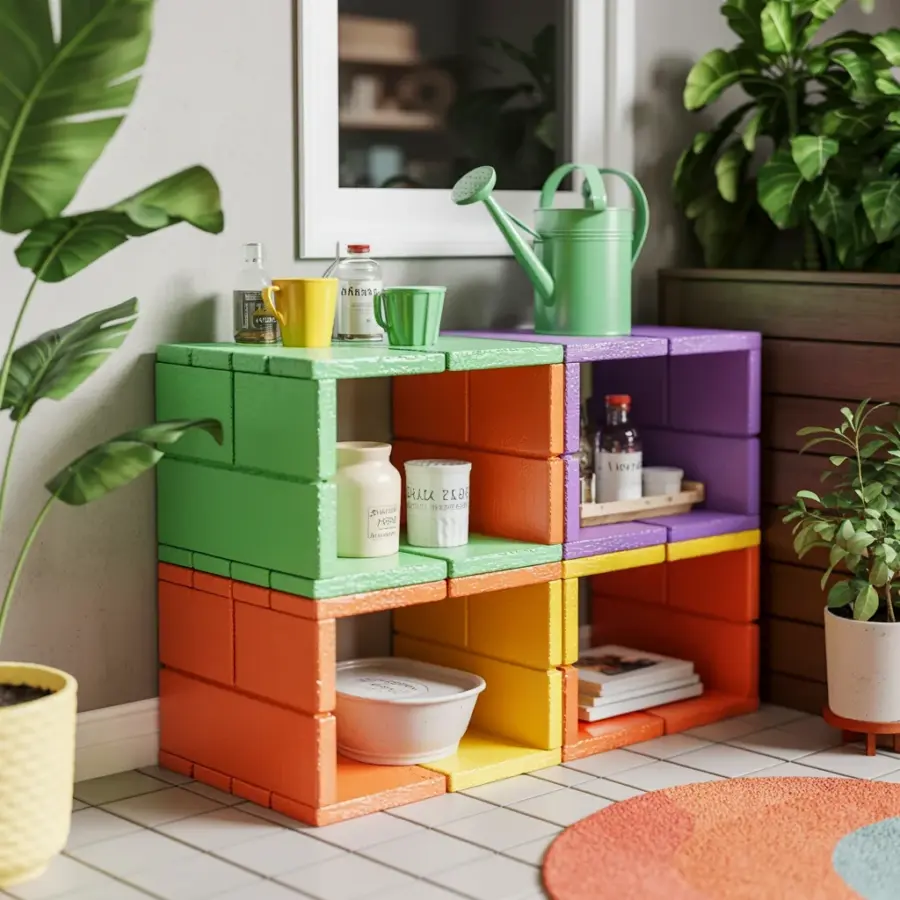
Last summer I needed cheap outdoor seating so badly I almost bought a secondhand couch that smelled like wet dog. Instead I stumbled on the cinder block patio furniture hack and built a whole sofa for under forty dollars. No power tools, no glue, no screws, just concrete blocks and wooden planks. It looked good enough that my neighbor asked me to build one for her porch. Here is exactly what worked and what I would change if I did it again.
Why I Chose This No-Tools Approach for My Patio
I am not a skilled woodworker. My last project involved a crooked birdhouse and a lot of curse words. The idea of cutting lumber or drilling pilot holes made me anxious. This patioseatingdiy promised zero tools and zero mess. All I had to do was stack blocks and slide in wood. That sounded like something even I could handle.
The other reason was cost. A decent outdoor sofa set runs three hundred dollars minimum. I spent about thirty eight dollars total for eight concrete blocks and three pine boards. That left me enough money to buy a cheap outdoor cushion and a six pack of something cold. For a weekend project that took maybe two hours, the payoff felt huge.
Materials You Actually Need (and What I Used)
You do not need fancy supplies. Here is the exact list I followed, plus the sizes that worked best for me.
- 16 concrete blocks (standard 8x8x16 inch) – I used eight for the base and eight for the back. Color does not matter but choose ones without huge chips.
- 3 wooden planks – I bought 2x12x8 foot boards. They are thick enough to hold weight without bowing. Ask the home improvement store to cut them in half lengthwise if you want a smoother seat, but I kept mine full width for simplicity.
- Outdoor cushion – I grabbed a 72 inch bench cushion from a discount store. It covered the whole top plank.
- Optional: landscape fabric and sandpaper – I used a little sandpaper to knock off splinters on the wood. The fabric went under the blocks to keep them from shifting on my uneven patio.
The Simple Assembly Process (Stack and Slide)
I laid out the base first. I placed two blocks side by side with the holes facing up. Then I put a row of two more blocks directly behind them. That created a rectangle shape about 32 inches deep and 64 inches wide. The whole thing sat directly on the ground. No leveling, no shims. I just nudged the blocks until they looked straight from the house.
For the seat I slid the first plank across the front row of blocks. The second plank went on the back row. They rested flush against each other with no gap. Then I stacked the remaining eight blocks on top of the back edge to form the backrest. I did a simple two block high wall, two blocks wide, with the holes facing forward. That gave me a seat height of about 16 inches and a backrest that stopped just above my shoulder blades.
What Worked and What Did Not (Honest Lessons)
The biggest success was stability. I worried the whole thing would wobble, but the weight of the concrete plus the friction of the wood kept everything solid. Even when my friend flopped down sideways, nothing shifted. The woodandblocks combo really does lock together naturally.
What did not work was the raw wood. After two weeks of morning dew the boards started to warp slightly. The edges curled up a bit. I had to sand them down and apply a coat of outdoor sealer. If I rebuilt this I would buy pressure treated lumber from the start. It costs a few dollars more but saves the hassle.
Another surprise: the blocks absorb heat. On a 95 degree day the seat felt warm but not unbearable because the wood insulated me. The blocks themselves were hot to touch. I suggest putting a thin outdoor rug under the cushions if your patio gets full sun.
Styling Your Cinder Block Sofa for Summer
This build looks industrial and raw on its own. I dressed it up with a bright yellow cushion and a couple of throw pillows. The concrete blocks have holes that make perfect cup holders. I slipped in a few tea light candles in small glasses. For
#cinderblockfurniture #patioseatingdiy #woodandblocks #outdoorproject #summerdiy
Leave a Comment