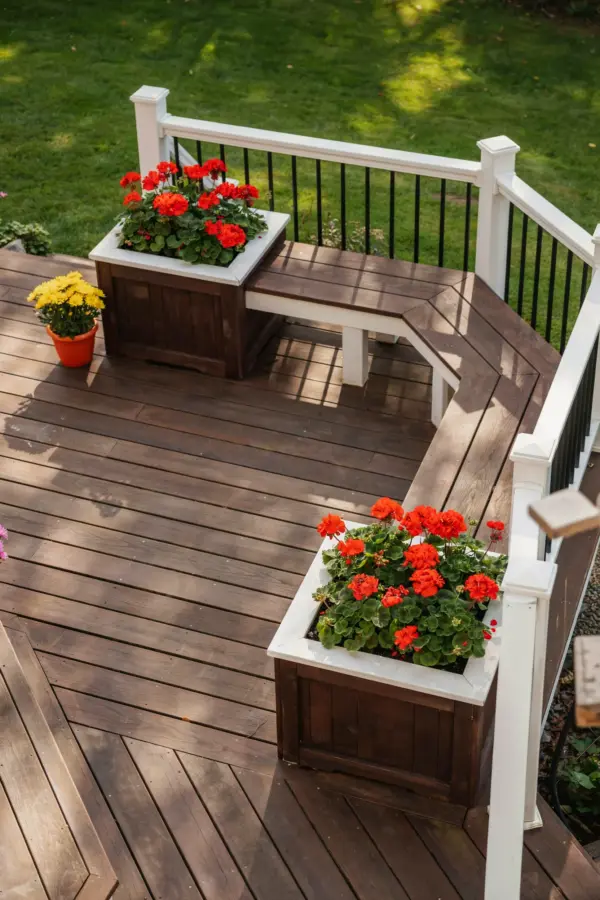
Planning Your Budget Friendly Deck Bench with Planters
Building a deck bench with planters is one of those weekend projects that makes you feel like you scored a major win for both your space and your wallet. I’ve priced similar benches at big box stores and nearly choked on the tag. So I grabbed my circular saw and figured out how to build one for less than sixty bucks (not counting plants). The key is thinking ahead about what you already have and what you can swap for cheaper alternatives. For example, many plans call for cedar, but I used pressure treated pine and sealed it well. That saved me almost half the lumber cost.
You don’t need a workshop full of fancy gear either. A drill, a saw, a level, and some screws will get the job done. I also recommend raiding your scrap pile for the planter boxes. Old fence boards or leftover decking work perfectly. The whole point is to create something that looks intentional and comfortable without spending a fortune. And honestly, when you mix seating with greenery, it feels like your deck doubled in size.
Choosing Affordable Lumber for Your DIY Outdoor Seating
For most DIY outdoor furniture projects, people default to cedar or redwood. Those are beautiful but expensive. I’m a fan of pressure treated southern yellow pine. It resists rot, holds up to weather, and costs about a third of cedar where I live. The downside? It can warp if you don’t let it dry out before building. I stack my boards flat in the garage for a week, then pick the straightest ones for the bench frame.
If you want a cleaner look without the green tint of pressure treated wood, try pine board soaked in a wood preservative. You can also use leftover composite decking scraps for the planter sides. Just be aware that composites expand and contract more than wood, so leave a little gap between joints. Here is my short list of lumber picks that won’t hurt your budget:
- Pressure treated pine – cheap and durable, just let it dry first
- Rebuilt pallet wood – free if you have time to de-nail and sand
- Fence pickets – great for planter boxes, under two bucks each
- Leftover deck boards – if you recently built or replaced a deck, use those odds and ends
I always buy a little extra lumber because I inevitably cut something wrong. Return what you don’t use, but a spare board saved me a trip to the store twice now.
Getting the Seating Height and Planter Depth Right
Nothing ruins a nice afternoon on the deck like a bench that sits too low or too high. Standard seating height is around 18 inches from the floor to the top of the seat. But if you’re building a deck bench with planters, you have to account for the planter boxes at each end. They stick up above the seat level, which can make the bench feel cramped if you don’t plan the depth.
I aim for planter boxes that are about 12 inches deep on the inside. That gives enough room for roots of small shrubs or flowers. The bench seat sits between them, so the overall width (including planters) is usually 60 to 72 inches. Leave yourself at least 12 inches of seat space per person. My bench has a 48 inch seat section with two 10 inch planters on each end. It seats two people comfortably, and the planters don’t interfere with leg room.
If you add a backrest, raise the seat height to 17 inches instead of 18 to keep the back angle comfortable. Measure twice, then measure again. I messed up once and had to shim the whole thing. Not a big deal, but it added an afternoon of fixing.
Simple Drainage Solutions That Won’t Break the Bank
Planters without drainage are just mud tubs. And rotted roots smell terrible. For a budget DIY deck bench with planters, I skip expensive drainage trays and use a cheap trick. I drill a row of ½ inch holes about an inch from the bottom of each planter box. Then I line the bottom with a layer of pea gravel (bag from the hardware store, about four dollars). The gravel keeps soil from clogging the holes and lets water escape.
If the planters sit directly on your deck, raise them just slightly with short rubber feet or pieces of scrap wood. That way water can flow out instead of pooling under the box. I also cut a small piece of landscape fabric to cover the gravel before adding soil. This prevents dirt from washing out the holes. Total cost for drainage: maybe six bucks.
One more tip: avoid fine sand or clay soil in the planters. Use a lightweight potting mix mixed with perlite. It drains faster and won’t weigh down your bench structure. That matters because a waterlogged planter can add serious pounds. Save your back and your wallet.
Integrating Planters with Your Existing Deck Rail
Your deck bench with planters should feel like it belongs, not like an afterthought. If you have a deck railing, match the bench height to the bottom rail. That way the bench looks like a built in extension. I set the back of my bench about two inches away from the railing so I can sweep out
#deckbench #diywoodworking #outdoorfurniture #planterbench #woodworkingplans
Leave a Comment