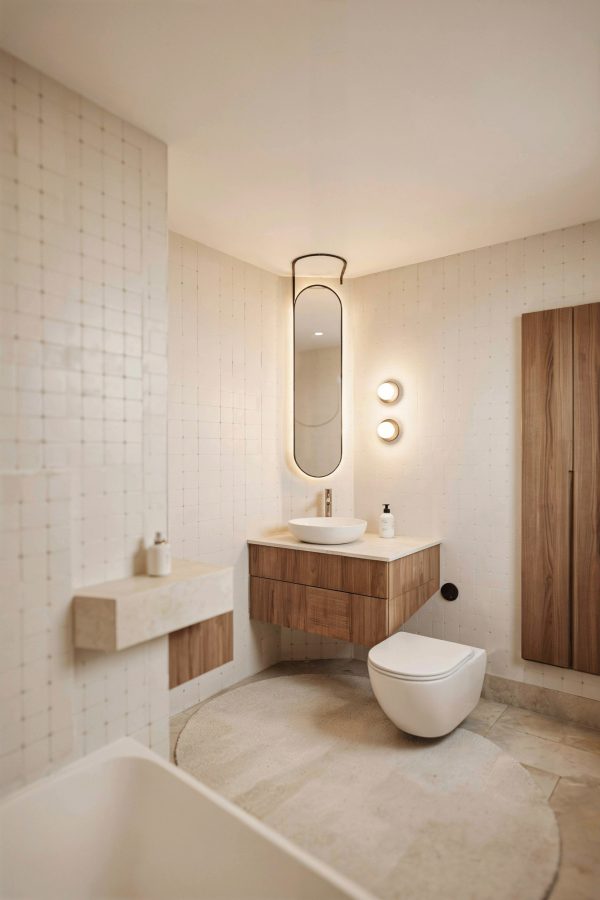
Why a Japandi Half Bath Was the Best Decision for Our Tiny Powder Room
Our half bath was a disaster. You know the kind: a cramped closet with builder-grade beige, a vanity that looked like a plastic tote, and a light fixture that buzzed every time you flipped the switch. When I started researching Japandi half bath ideas, I didn’t just want a prettier room. I needed a space that felt calm, functional, and honestly, bigger than its four-by-six footprint. Japandi (that blend of Japanese wabi-sabi and Scandinavian hygge) turned out to be the perfect fit for a room that had zero square footage to spare.
Here is what actually worked in our tiny powder room, what I wish I had known before painting the first coat, and how you can pull off the same serene look without spending a fortune or losing your mind.
Choosing a Wooden Vanity That Doesn’t Make the Room Feel Smaller
The biggest challenge in a half bath is that every piece of furniture has to earn its place. A bulky vanity can swallow the whole room. I spent weeks scrolling through options online, and nearly gave up until I remembered the core Japandi principle: use natural materials but keep them light.
I went with a solid oak vanity with a matte finish. No glossy lacquer, no heavy grain. Just a soft, sanded look that feels warm without being overwhelming. The vanity is wall-mounted, which frees up floor space and makes the room feel like it floats. If you cannot find a wall-mounted option, a slim console with exposed legs works just as well.
- Look for vanities with flat panel doors (no raised panels or ornate details).
- Skip drawers if you can; a single open shelf underneath creates an airier look and keeps towels within reach.
- Choose a natural stone or ceramic vessel sink instead of an undermount. It adds texture without clutter.
The wood tone I chose is a medium oak, but a pale ash or whitewashed teak would also look lovely. The trick is to avoid anything too dark or too orange, because in a small room that wood becomes the focal point.
Matte Black Fixtures Give the Room an Anchor
I am not usually a fan of black accents in small bathrooms because they can feel heavy. But Japandi half bath ideas lean on contrast the right way. I installed a matte black faucet, a matte black toilet paper holder, and a simple black mirror frame. The key is to use the black sparingly.
Our faucet is a waterfall-style model with clean lines. No curves, no extra levers. Just a smooth handle and a gentle stream. The black reads more like a shadow than a color, which keeps the room grounded without making it feel smaller. I also swapped out the shiny chrome towel ring for a matte black one. That one switch alone made the space feel intentional.
One thing I learned the hard way: matte black shows water spots more than chrome does. So I keep a microfiber cloth next to the sink and wipe down the faucet after each use. It takes ten seconds and keeps the look pristine.
Soft Beige Tiles Created the Background We Needed
Our original tile was a glossy white subway pattern that looked sterile and cold. I wanted warmth, but I also knew that dark tile would make the room feel like a cave. The sweet spot was a soft beige porcelain tile with a matte finish. The tiles are rectangular, laid in a vertical stack bond, which draws the eye upward and makes the ceiling feel higher.
The beige is not a flat tan. It has subtle variations, like sand at low tide. In direct light it looks almost cream, and in shadow it reads like warm stone. That natural variation is what gives Japandi bathrooms their relaxed, organic feel. You do not need expensive handmade tiles for this effect. Big-box stores sell matte porcelain planks in similar tones for under three dollars a square foot.
I paired the tiles with a pale grout that matches the tile rather than contrasting. White grout would have looked too busy in such a small space. The seamless look helps the walls recede, making the room feel slightly larger than it is.
Prioritizing Function in a Tight Footprint
Our half bath is only twenty square feet. That means every inch has to do double duty. I hung a narrow shelf above the toilet for a small ceramic dish and a single dried eucalyptus bundle. No bottles, no fancy jars. Just one or two objects that serve a purpose or bring a moment of calm.
Storage was a puzzle. We do not keep extra toilet paper rolls in the bathroom because they just sit on the floor and collect dust. Instead, I tucked a slim woven basket under the vanity for two spare rolls and a plunger. That basket is made of seagrass, which adds texture and fits the natural materials theme without shouting.
Lighting was another function priority. The overhead fixture was harsh, so I replaced it with a dimmable, frosted glass pendant that casts a soft, warm glow. A single sconce on the wall next to the mirror would also work if you have the wall space. The goal is to avoid shadows on your face when you are washing hands or checking your hair.
Adding Warmth With Textiles and Subtle Lighting
People often forget that Japandi is not just about wood and tile. It is also about softness. I put a small, handwoven cotton rug in front of the sink. It is a pale oatmeal color with a simple stripe pattern. It feels good under bare feet and absorbs drips from the sink. The rug is machine washable, which is non-negotiable in a half bath used by guests.
For the window (yes, we have one tiny window above the toilet), I hung a bamboo Roman shade instead of curtains. Curtains in a half bath look fussy and collect soap scum. The bamboo shade filters light gently and adds a layer of organic material that ties back to the wood vanity. When the shade is down, the room glows like a lantern.
I also added a small wooden stool next to the toilet. It holds a single folded washcloth and a small ceramic soap dish. The stool is low and unobtrusive, but it gives the eye a place to rest. Without it, the corner would feel empty and cold.
Keeping the Clutter Out by Design
If there is one lesson I learned from this project, it is that Japandi half bath ideas require ruthless editing. I went through every item in our old bathroom and asked: does this bring warmth or function? If the answer was no, it went into a box. That included the plastic toothbrush holder, the bottle of expired lotion, and the decorative seashells that were gathering dust.
Now, the countertop holds exactly three things: a wooden soap dispenser, a small ceramic dish for a ring, and a succulent in a terracotta pot. That is it. Everything else lives in a shallow drawer inside the vanity. The drawer holds a comb, a small first aid kit, and a lip balm. Even the trash can is hidden inside the vanity cabinet.
I also painted the walls a warm off-white with a touch of gray (something like Benjamin Moore’s “White Dove”). The color recedes and does not compete with the wood and tile. You could go a shade darker if you want more coziness, but for a true Japandi feel, keep the wall color muted and neutral. The texture of the tile and the grain of the wood are your real decorations.
The Surprising Detail That Made the Biggest Difference
I saved the best tip for last. The one thing that transformed our small powder room from a nice bathroom into a genuinely serene space was the mirror. Instead of a standard rectangular mirror with a frame, I installed a round mirror with a thin, black metal rim. The round shape softens all the straight lines in the room: the rectangular vanity, the linear tile, the squared-off medicine cabinet. It is a small tweak, but it made the room feel less rigid and more like a calm retreat.
The mirror is also at the correct height for our family, which sounds obvious but is often overlooked. Hang your mirror so the center is at eye level for the person who uses the sink most often. In our case, that meant lowering the mirror three inches from where the builder installed the original. It cost nothing to adjust and changed how the room feels when you stand at the sink.
If you want to try this look without a major renovation, start with the mirror. Swap in a round option from a secondhand shop or online. Then add a single wooden shelf and a matte black faucet. You will be surprised how much calm a few small changes can bring to a tiny room.
Final Thoughts on Making Japandi Work in a Small Space
Transforming our half bath taught me that you do not need a big renovation budget or a huge room to create a space that feels like a breath of fresh air. Japandi is about subtraction, not addition. By choosing a wooden vanity, matte black fixtures, soft beige tiles, and only the essentials, we turned a cramped powder room into one of the most relaxing spots in our home.
If you are planning your own bathroom refresh, start with one element that feels most off in your current space. Maybe it is the shiny chrome faucet, or the ugly vanity, or the clutter on the counter. Swap that one thing with a natural, subdued alternative. See how it feels. Let the room breathe. And when you find your calm, save this post so you can come back to it for your next upgrade.
#JapandiBathroom #HalfBathIdeas #SmallBathroomDesign #MinimalistBathroom #ZenBathroom