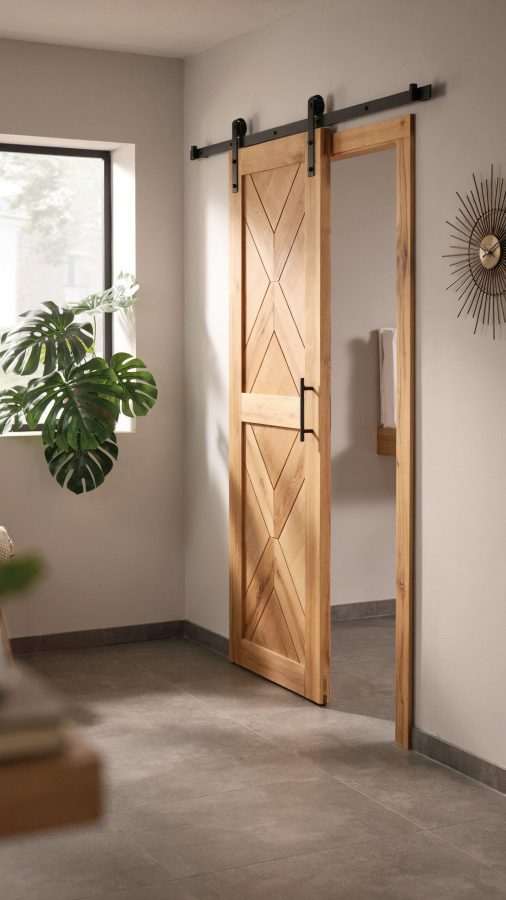
If you are dealing with a tiny bathroom, you already know that every inch counts. Standard swinging doors eat up precious floor space, making an already compact room feel even tighter. That is why a slidingbathroomdoor has become such a smart solution for modern homes. Unlike a traditional door that swings inward, a sliding door glides along a track, freeing up that corner near the toilet or vanity. Whether you are renovating a small powder room or squeezing a shower into a narrow footprint, this approach can change how you use the space. In this guide, I will walk you through concrete steps to pick, install, and style a sliding door that actually works for your tiny bathroom. No hype. Just real ideas you can use.
Why a sliding bathroom door saves space in small bathrooms
Think about the last time you opened a normal door into a tiny bathroom. You probably had to step back, squeeze past the door panel, or knock your knee on the toilet. A sliding door solves that problem by moving parallel to the wall, not into the room. That alone can reclaim up to 10 square feet of usable floor space, which is huge when your bathroom is only 25 square feet total.
Beyond the obvious spatial gain, sliding doors also offer design flexibility. You can mount them on an interior wall, hide them inside a pocket, or even hang them from a ceiling track. For very narrow bathrooms, a barn door style that slides outside the room (along an exterior wall) keeps the interior completely open. This is a practical trick I have used in rental bathrooms where you cannot tear down walls but still need more elbow room.
Another often overlooked benefit is placement. With a swinging door, you are forced to position the toilet or vanity a certain distance from the door swing. With a slider, you can push fixtures closer to the door opening, which opens up more layout options. It is a simple change that makes a surprisingly big difference.
How to choose between a pocket door and a barn door for your bathroom
This is the first big decision you will face. Both pocket and barn doors slide, but they work very differently in a small bathroom. A pocket door disappears into a cavity inside the wall. That means no exposed track or hardware visible when the door is open. It gives you a clean, minimalist look that is ideal for modern bathrooms.
A barn door, on the other hand, slides along a track mounted on the outside of the wall. It stays fully visible, which can be a design feature in itself. Barn doors are easier to install because you do not need to cut into the wall. But they require wall space beside the door opening for the door to slide into. In a super tiny bathroom, that space may not exist.
Here is a quick comparison to help you decide:
- Pocket door: Requires wall demolition and reframing. Best for new builds or major renovations. No exposed hardware. Saves space on both sides of the wall.
- Barn door: Surface mounted. Needs at least 24 inches of clear wall next to the opening. Great for renters or quick upgrades. Adds a rustic or industrial vibe.
- Ceiling mount sliding door: Similar to barn door but track is on the ceiling. Works when side walls are too short. Door hangs from rollers, not a header.
For most small bathrooms that are already finished, a barn door is the more practical route. But if you are gutting the space anyway, a pocket door gives you that seamless, high-end feel.
Step by step: measuring and preparing your bathroom for a sliding door
Before you buy anything, you need to measure accurately. Start by measuring the width and height of your existing door frame. Standard interior doors are 30 or 32 inches wide, but your bathroom might be narrower or wider. Write down the rough opening dimensions, which include the frame, not just the door slab.
Next, check for obstacles. If you go with a barn door, measure the wall space to the side where the door will slide. You need at least the full width of the door plus a few extra inches for the handle and stoppers. Also look for light switches, outlets, or towel bars that might get blocked. I once installed a barn door only to realize the light switch sat exactly where the door would park. That took an extra hour to relocate.
For a pocket door, you need to verify that the wall is non load bearing and that there are no pipes or electrical wires inside the cavity. Use a stud finder and a good measuring tape. Mark the exact center of the door opening. The pocket door frame kit will come with instructions, but the key step is to ensure the wall depth is at least 4 inches wider than the door itself. If your bathroom wall is too shallow, you might not have room for the pocket.
Modern sliding door designs that work in tiny bathrooms
Once you know your measurements, you can pick a style that fits your bathroom decor. For a modern look, consider a flat panel door with a smooth finish. No fussy trim or panels. White, light gray, or a warm wood tone can make a small bathroom feel bigger. I personally like the look of a solid core slab door with a minimalist track system in black matte.
Another popular option is a mirrored sliding door. This is a genius trick for tiny bathrooms because it adds a full length mirror without taking up wall space. The mirror reflects light and makes the room appear larger. You can find mirrored barn door kits online, or you can buy a plain door and have a mirror cut to fit and mounted on the surface.
Glass sliding doors are also worth considering, especially for a wet area like a shower. But for the main bathroom entry, a frosted or textured glass door lets in natural light while still providing privacy. Combine it with a slim aluminum track for a clean, contemporary look. Avoid heavy wood doors with lots of molding in a truly tiny space because they visually shrink the room.
Installing a sliding barn door in a small bathroom without professional help
You can totally install a barn door yourself if you have basic tools. Here is a simplified version of the process. First, buy a barn door hardware kit that matches your door weight. Most kits include the track, rollers, floor guide, and stoppers. Measure and mark the track height above the door opening. The typical rule is to position the track so the door hangs about half an inch above the floor.
Use a level to mark the screw holes for the track brackets. Drill pilot holes into the studs. If your wall has no studs where the brackets need to go, use toggle bolts rated for the door weight. Attach the track securely. Then mount the rollers onto the back of the door. Lift the door onto the track, sliding the rollers into the channel. Install the floor guide at the bottom to keep the door from swinging.
For a bathroom, pay attention to the floor guide. You want a low profile guide that does not trip you. Some kits come with a small block that screws into the floor, but you can also get a clamp on guide that attaches to the door bottom. Depending on your bathroom floor material (tile or vinyl), you might need a masonry bit for drilling into tile. Always go slow and use water to keep the bit cool.
Privacy and ventilation concerns with sliding doors in bathrooms
One common worry is that sliding doors do not seal as tightly as a traditional hinged door. This can be a real issue with smells and moisture. The good news is you can fix most of these problems with a few adjustments. For a barn door, add a door sweep along the bottom edge. A brush seal or a rubber strip will block light and airflow when the door is closed.
For the gap between the door and the wall on the sliding side, use a magnetic latch or a spring loaded lock that pulls the door tight against the jamb. Some barn door kits include a rubber gasket that attaches to the wall side. For pocket doors, you can install a weatherstripping kit specifically designed for pocket doors. It seals the gap when the door is closed.
Ventilation is another factor. A small bathroom needs an exhaust fan, regardless of door type. If your sliding door is not perfectly sealed, that fan becomes even more important. Make sure your fan is powerful enough for the room size. You can also crack the door open slightly after a shower to let steam escape. A door with a small louvered vent or a gap at the bottom can help, but that will compromise privacy slightly.
Accessorizing your sliding bathroom door for style and function
Once the door is installed, think about the hardware and finishing touches. The handle or pull is a small detail that makes a big visual impact. For a modern look, choose a long horizontal bar pull in brushed nickel or black. Avoid tiny knobs because they are hard to grab when the door is flush against the wall.
You can also add a lock for privacy. Many sliding door locks are designed as a simple slide bolt on the inside of the door. For a barn door, you can install a hook and eye latch or a barrel bolt on the edge. Pocket doors usually have a recessed lock that pops out from the side. Make sure the lock mechanism is easy to operate from inside the bathroom.
If you want to soften the look, consider adding a small curtain or roman shade on the window side. Not on the door itself, but on the window inside the bathroom. That keeps the sliding door clean and uncluttered while still controlling privacy. Another smart addition is a magnetic door stop on the wall where the barn door parks. It prevents the door from banging into the wall and damaging the paint or tile.
Budget friendly alternatives to expensive sliding door systems
Not everyone wants to spend hundreds on a custom door. You can adapt an existing hollow core door to work as a sliding door. Paint it, add a handle, and mount it on a track. That can cut costs by more than half. Some hardware kits are available for under 100 dollars on home improvement sites. Just make sure the door is not too heavy for the track.
Another budget idea is to repurpose an old wooden louvered door from a salvage yard. Sand it, paint it a fresh white or soft sage green, and attach it to a simple track. The louvers actually help with ventilation, which is a bonus for a bathroom. Plus, the vintage look adds character without feeling stuffy.
If you do not want to install anything at all, consider a sliding panel that hangs from a ceiling mounted curtain rod. You can use a lightweight room divider panel as a door for a very small powder room. It is not a permanent solution, but it works for a guest bathroom or a rental where you cannot make structural changes.
To wrap this up, a sliding door can genuinely open up your small bathroom both physically and visually. Whether you go with a pocket door for a seamless finish or a barn door for a statement look, the key is to plan the measurements, seal for privacy, and choose hardware that matches your bathroom style. Start by measuring your space, then pick the door type that fits your renovation level. I have seen tiny bathrooms feel twice as big after swapping out a swing door for a slider. If you are in the middle of a bathroom project or just starting to plan, I hope this guide gave you some practical steps to move forward. Give it a try, and I think you will be surprised at how much difference one sliding door can make.
#slidingbathroomdoor #smallbathroomideas #bathroomdecor #modernbathroom #spacesaving
Leave a Comment