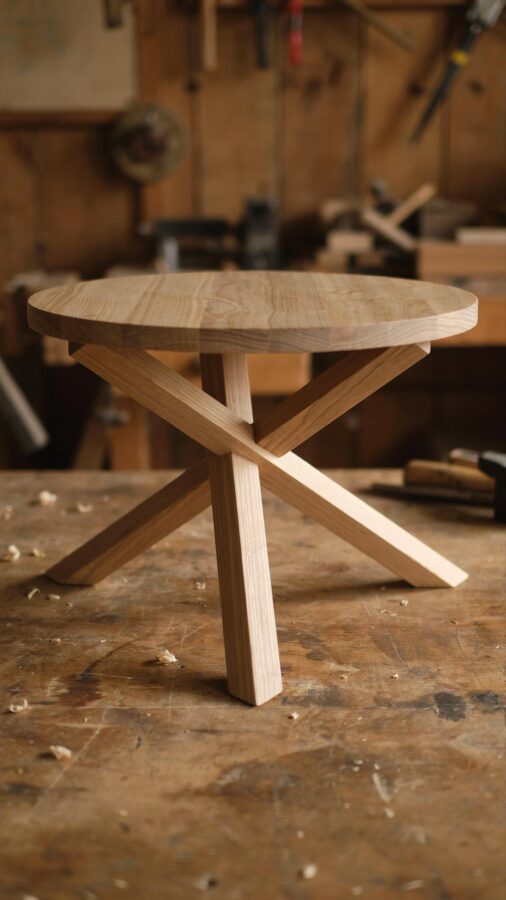
Why Most DIYers Fail With Three Stick Table Legs
You found a photo of a minimalist side table with legs made from just three wooden sticks. It looks simple, so you head to the lumber yard, grab some scrap, and start cutting. Forty five minutes later the legs wobble, the joints split, or the whole thing leans like a tired fence post. That is exactly the problem I want to help you avoid. Building simple wooden table legs from three sticks is not hard, but there are a few quiet mistakes that turn a weekend project into a firewood pile. After building about two dozen of these legs for my own shop and for friends, I have made nearly every error in the book. Let me walk you through the common pitfalls so your first set of legs comes out straight, strong, and exactly the way you imagined.
Choosing the Right Wood for Your DIY Table Legs
The biggest mistake beginners make is grabbing the first piece of wood they find. Soft pine from the big box store can work, but only if you pick straight, clear boards with no knots near the ends. Even better, look for white oak, ash, or poplar. These species hold screws and glue much better than construction grade spruce. For a small side table, 1×2 or 2×2 lumber in a hardwood costs maybe a few dollars more per leg, and that small expense saves you from splitting a leg when you drive a screw into it later.
Another common error is using wood that is still wet or has high moisture content. Green wood shrinks as it dries, so your perfectly aligned three sticks will twist and warp within a week. Check the ends of the board. If you see fine cracks or a fuzzy surface, the wood is still drying. Stick to kiln dried lumber from a reputable supplier. Run your hand along the edge. If it feels smooth and the board rings when you tap it, you have good material.
- Choose hardwood (oak, ash, poplar) for durability.
- Avoid lumber with large knots or cracks near the joint area.
- Pick kiln dried wood to prevent post assembly warping.
- For a budget option, use clear pine but reinforce joints with dowels.
Measuring and Cutting Three Sticks Accurately
I once cut three sticks to the same length using a tape measure. The result was three pieces that differed by nearly half an inch because I measured from the hook each time. The hook on a tape measure shifts slightly. Instead, use a stop block on your miter saw or clamp a piece of scrap wood to act as a fence. Cut the first stick to your desired length, then use that stick as the measuring guide for the other two. Mark all three at once by laying them side by side and drawing a square line across.
Another trap is a non square cut. If the end of your stick is off by even two degrees, the leg will look twisted when you join the three sticks together. Always check your saw blade is set to exactly 90 degrees. Make a test cut on a piece of scrap and hold a square against it. If you see light, adjust the blade and try again. Take the extra 30 seconds to verify. It saves you from having to plane or shim later.
The Common Mistake of Ignoring Grain Direction
Wood grain matters a lot when you are joining sticks. If you glue two sticks with the grain running perpendicular, the joint will be weak and may fail under weight. The correct approach is to align the grains so they run in the same general direction along the length of the leg assembly. For a tripod or three stick leg, arrange the sticks so that the grain on each piece runs parallel to the leg. This keeps the glue line strong and the wood fibers supporting each other.
A related mistake is placing the pith (the center ring of the tree) near the edge of your stick. The pith is softer and more prone to cracking. If you have a board with a visible pith line, cut it out or orient it toward the inside of the leg where it will be hidden and less stressed. Mark the inward facing side of each stick with a small pencil dot before assembly so you don’t mix them up.
How to Join the Sticks for Maximum Strength
Many DIYers simply butt the three sticks together and drive a screw through them. That works for a weekend, but within a few months the screws loosen and the legs wobble. The better method is to use a combination of glue and mechanical joinery. For a three stick leg, I like to drill a shallow pocket hole on the inner face of two sticks, then insert a short dowel into the third stick. That dowel locks the pieces together and prevents twisting.
If you do not have a doweling jig, you can cut a notch into each stick where they meet. A simple half lap joint, where each stick is notched halfway through its thickness, gives a large glue surface and prevents sliding. Clamp the assembly tightly and let the glue cure for at least
#woodworking #woodworker #diywoodworking #tablelegs #woodenfurniture
Leave a Comment